

Sustainability Jargon, Anthropic's Marketing Masterstroke, Women aren't Celebrating, Hasslers, Career Dystopia
Conversations of the Week: March 13, 2026

Sustainability jargon needs to go
This article I wrote for Trellis, arguing that it's time to retire the ubiquitous jargon, “stakeholder engagement” sure got people talking!

I dislike the term, because:
Both words are jargon. Say what you are doing. Say who you are doing it with.
If that’s too hard, whatever you are doing probably isn’t useful.
The term enables vague, hand-waving commitments.
And it is unintentionally revealing about how far we still have to go.
If it’s a stakeholder, name the stakeholder.
If you are “engaging,” that raises even more questions. What are you actually doing when you “engage?” Are you publishing a report, deploying some PR, having a conversation, asking for (usually unpaid) input, seeking legitimacy, holding a meeting?”
Lots of people disagreed with me, and there was a huge range of critiques! The article even prompted Bruce Bolger of the Enterprise Engagement Alliance to write a long account of the complex history of stakeholder capitalism.
I found this discussion from Robert Friedman in the comments about the term and its relationship with power, super fascinating:
In my work on climate resilience, I find the real distinction between actual power-building and vague “stakeholder engagement” is between working alongside a community and working on their behalf (most often without them at the decision-making table). True power-building requires consent, accountability, and a long-haul, relational mentality that transcends a specific project.
I’d add another reason to ditch the term: many Tribal communities I’ve worked with specifically avoid “stakeholder” because of its colonial roots when land was claimed by driving stakes in the ground.
To lump all communities/partners/parties into one word is to eliminate their cultural nuances and even legal distinctions. It’s mission-critical that we be as specific as possible.
What Amodei’s marketing masterstroke reveals—and what it hides
I wrote about Anthropic, OpenAI, the Pentagon, and the current state of AI ethics.
“The factory of the future will have two employees: a man and a dog. The man’s job will be to feed the dog. The dog’s job will be to prevent the man from touching any of the automated equipment.” Warren Bennis
The Anthropic-Pentagon standoff is being sold as a modern morality play: a principled startup standing against a ‘Department of War’ while OpenAI plays the role of the opportunistic collaborator. It is therefore worth asking how much difference there really is between OpenAI and Anthropic, and what this incident tells us.
Overall, the clean ‘Good vs. Evil’ narrative is comforting, but insufficient. It is a marketing masterstroke that obscures a much darker reality: both companies are racing toward a future they admit they cannot control, and we all face questions without good answers.
My article covers the dispute and what it reveals about the broader situation. If you haven’t already, I highly recommend listening to this Ezra Klein interview with Dean Ball, a former Trump official, who is raising serious alarm over the wider implications of the Pentagon dispute. Fascinating throughout.
Don’t outsource your thinking
Outsourcing your thinking to AI is often seen as a young person’s problem.
But execs are at it, too. A recent study shows that 61% of CEOs and founders who responded to a survey are using AI for most decisions.
Maybe the AIs are suggesting all the layoffs? 🤔

We were all Over It on International Women’s Day
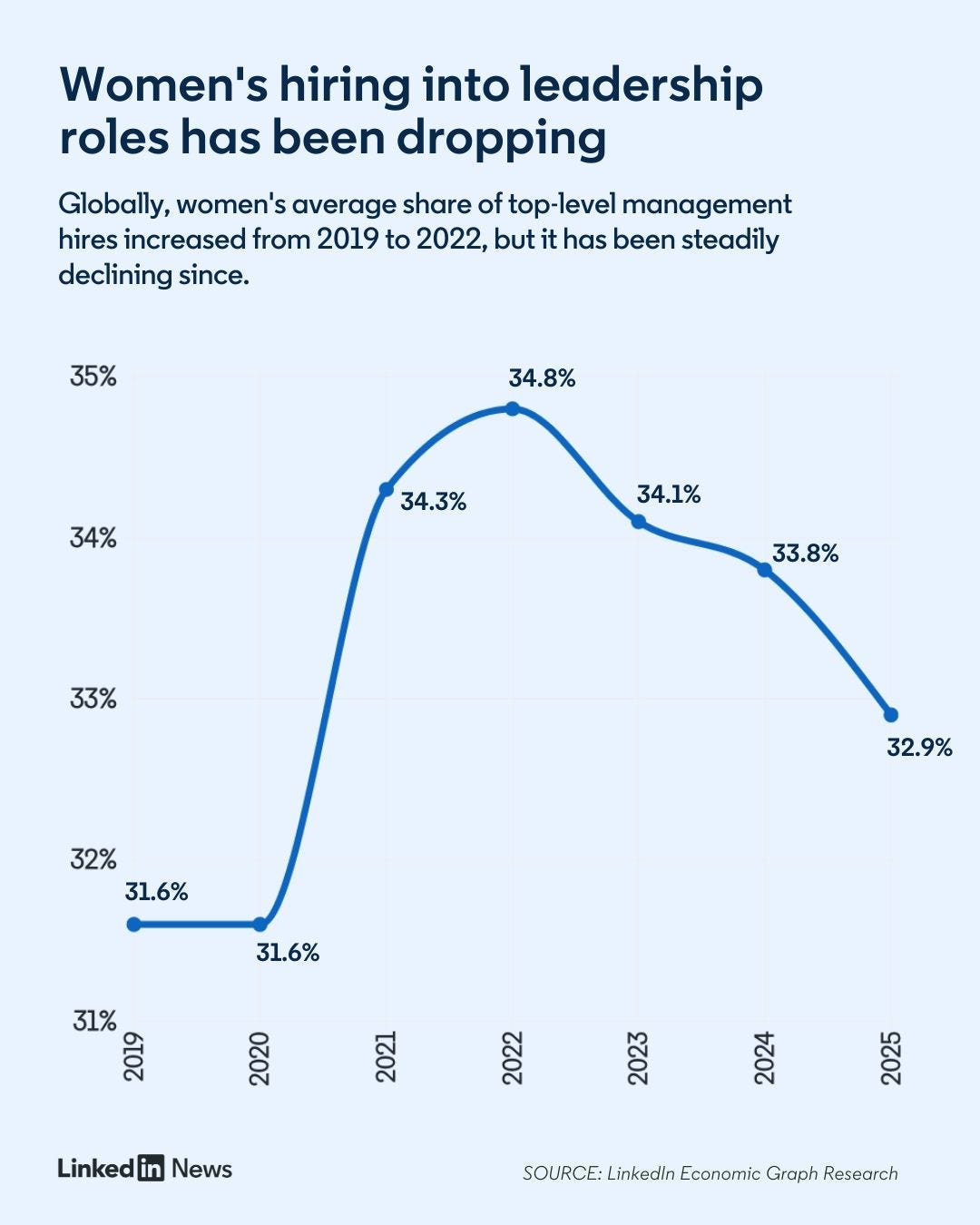
International Women’s Day. Not my favorite. Usually, a day of patronizing, fluffy social media content celebrating the way half the population gets *one day* where their interests are seen as relevant.
This year, the discussion was more muted, probably a combination of concern over “wokeness” combined with an overwhelming sense that women themselves are so over the performative nonsense.
Wonder why?
World Book Day, on the other hand, is a celebration I can get behind. Here are my niblings:


A new age of intimacy and connection?
One of my most confident predictions is that the age of AI will lead to a renewed focus on live events and live connection. Festivals, intimate gatherings, parties. Meeting in person and rediscovering our humanity will become ever more important.
This is the second episode of a great new series from the Ditchley Foundation called a walk round the lake. In it, Alex Mahon, is CEO of Superstruct, one of the world’s leading festival and live entertainment groups. Previously, Alex was Chief Executive of Channel 4, where she led the transformation of the UK’s public service broadcaster into a digital-first media company
She discusses live events vs social media, public service broadcasters, the state of the media, Trump, women in the workplace, and AI.
Recommended!
Training AI to destroy your profession
On a darker note:
Have you been laid off? Not to worry! You can get a job in one of a group of new firms that will contract you out to train AIs on replacing your entire profession!
“Each of these data companies touts its stable of pedigreed experts. Mercor says around 30,000 professionals work on its platform each week, while Scale AI claims to have more than 700,000 “M.A.’s, Ph.D.’s, and college graduates.” Surge AI advertises its Supreme Court litigators, McKinsey principals, and platinum recording artists. These companies are hiring people with experience in law, finance, and coding, all areas where AI is making rapid inroads. But they’re also hiring people to produce data for practically any job you can imagine. Job listings seek chefs, management consultants, wildlife-conservation scientists, archivists, private investigators, police sergeants, reporters, teachers, and rental-counter clerks. One recent job ad called for experts in “North American early to mid-teen humor” who can, among other requirements, “explain humor using clear, logical language, including references to North American slang, trends, and social norms.” It is, as one industry veteran put it, the largest harvesting of human expertise ever attempted.
These companies have found rich recruiting ground among the growing ranks of the highly educated and underemployed. Aside from the 2008 financial crash and the pandemic, hiring is at its lowest point in decades….
The workers at the bottom of this supply chain exist in a state of extreme precarity and maximum competitive frenzy — especially because their strict confidentiality agreements make it impossible for them to establish any kind of seniority or relationship that might outlast a particular project.”
Read this excellent, dystopian article in New York Magazine for more. I’ve actually been hearing about this for a while. Radhika Pillai pointed out that this is a lot like the content moderation farms, in spirit. And, as Eric Sacmann argued: “Yes, this story was both alarming and had the feeling of doom-loop inevitability. AI displaces 50% jobs and takes share. AI reinvests new earnings into taking more share by hiring displaced workers to improve models.”
This feels like it will get very messy, pretty soon.
Mamdani, hasslers, False Spring
Did you read this analysis of how hanging around with miserable, difficult “hasslers” makes you age faster? It could be time to shed that toxic person, just saying!
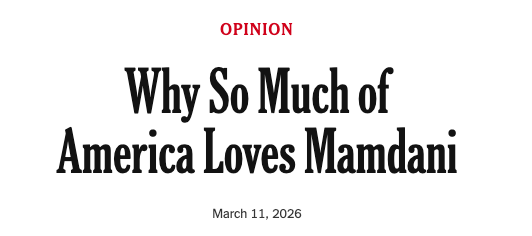
The New York mayor, Zohran Mamdani, is the subject of endless hit jobs, but is wildly popular anyway. David Wallace-Wells in the New York Times explains why. There’s a lot of hope here.
It was briefly Spring this week, and I was there to take in the view!

Now, it’s cold again, because as every New Yorker knows, there are in fact 12 seasons:
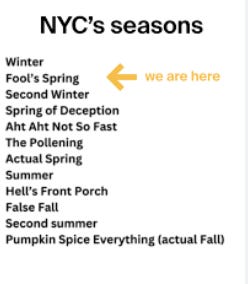
Now it’s freezing again. Still, I’m in the mountains for Spring Break, which is bliss.
Have a fantastic weekend!
Alison XX
https://kaipability.substack.com/p/the-engine-doesnt-love-younor-does You will relate.